Water Damage From an Upper Condo Unit Affects AC Closet in Miami, FL
Independent Mold Inspection & Testing Company · Real Investigation
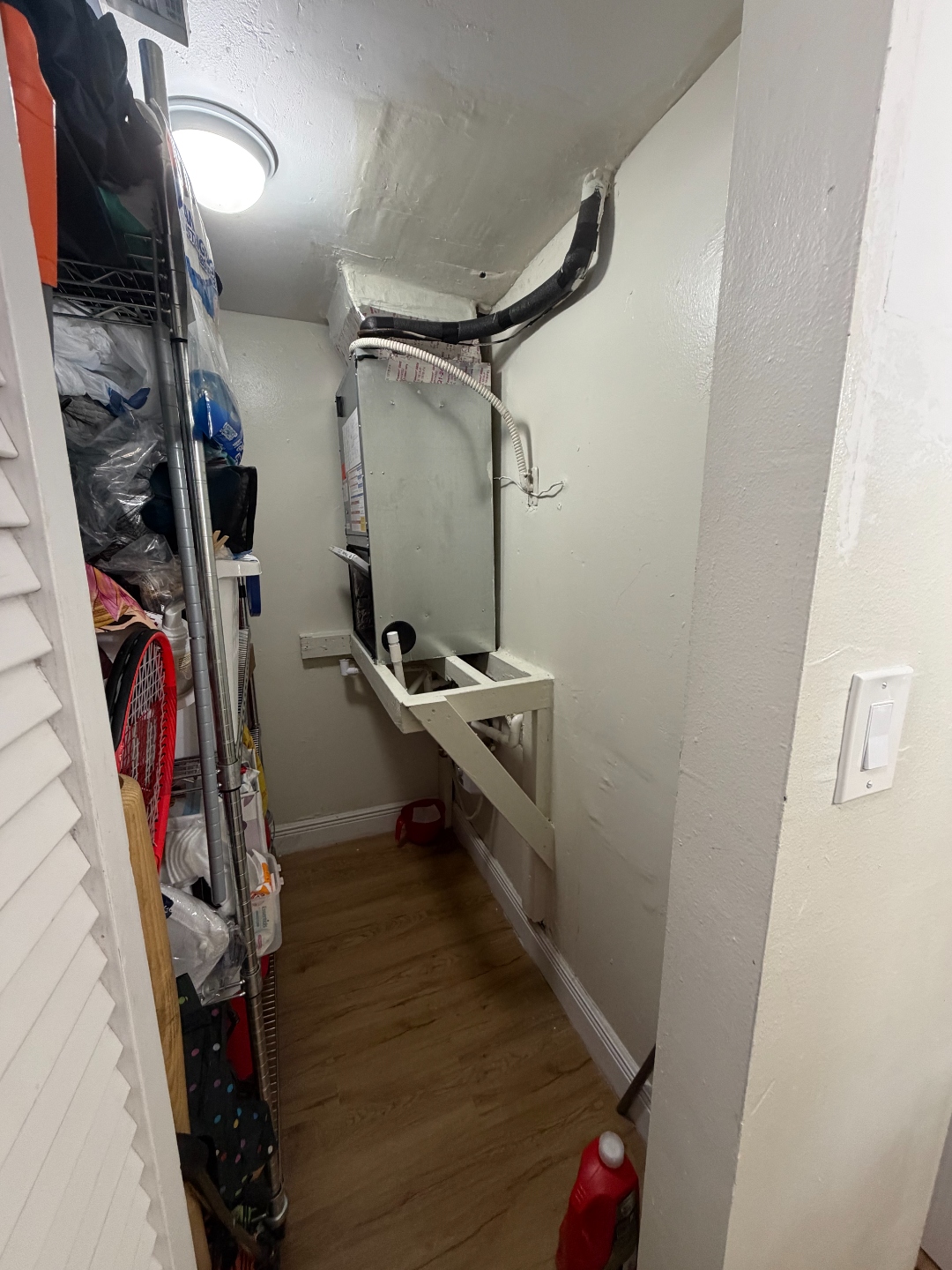
Water damage in a condominium does not always remain confined to the unit where the water-loss event originates. During this mold and moisture assessment in Miami, Florida, Home Enviro investigated conditions in a condominium unit following reported water intrusion associated with the unit above. The resulting damage affected the lower unit, with particular concern around the AC closet, ceiling, and surrounding building materials. Home Enviro's role was strictly to investigate and document conditions, not to perform any repair or remediation work.
Once water enters a floor and ceiling assembly, gravity can allow it to migrate downward and potentially move through penetrations, construction joints, openings around mechanical components, plumbing penetrations, wall and ceiling cavities, and other available pathways. This is a process more accurately described as vertical water migration or gravity-driven water intrusion, and it should not be confused with the building-science term “stack effect,” which describes vertical air movement rather than the downward travel of liquid water. In this Miami condominium, the assessment focused on what happened after the water traveled into the unit below, beginning with the AC closet, where the air handler occupies a relatively confined space and portions of the walls, ceiling, and areas behind the equipment are difficult to observe during a normal visual examination.
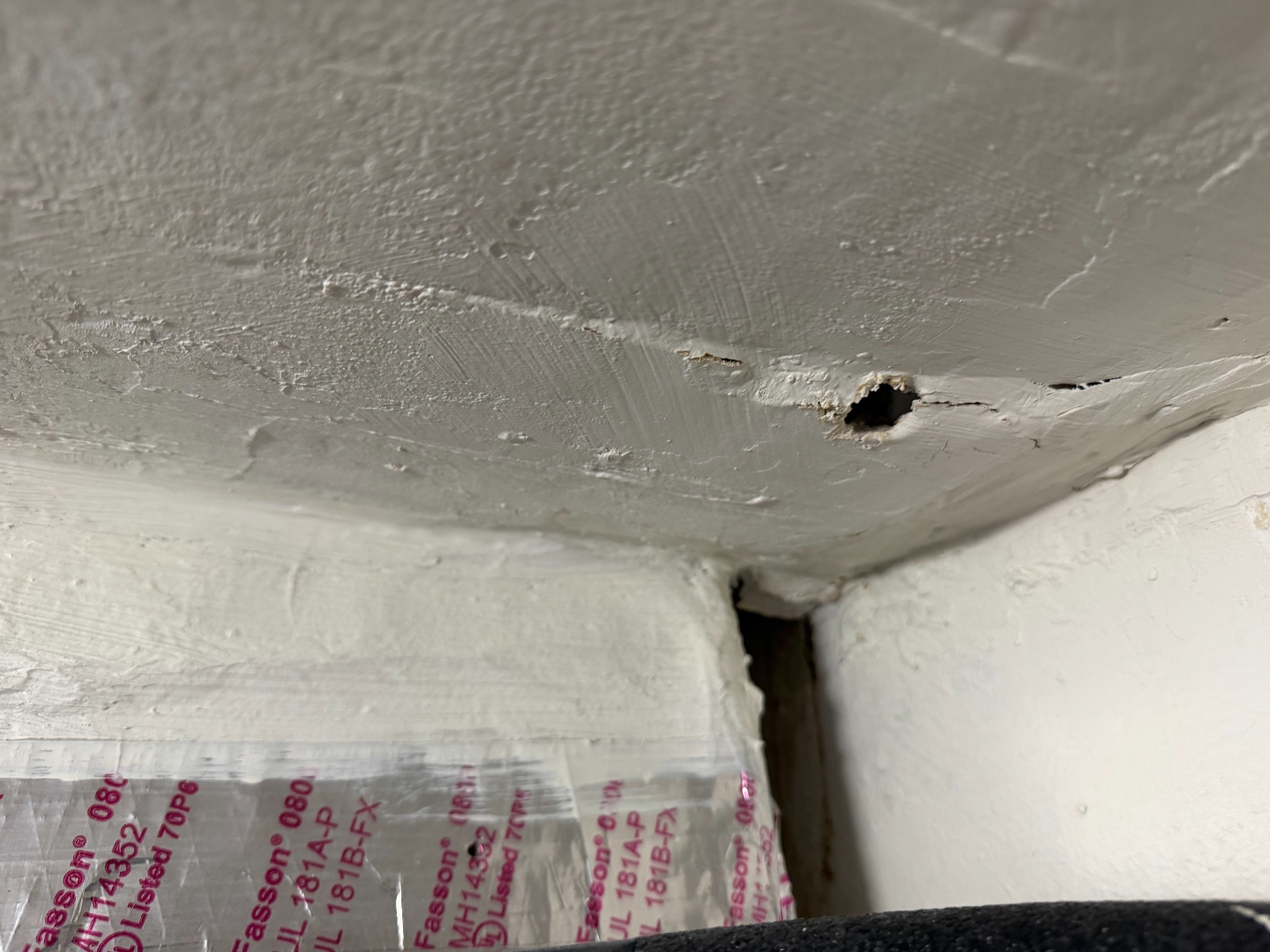
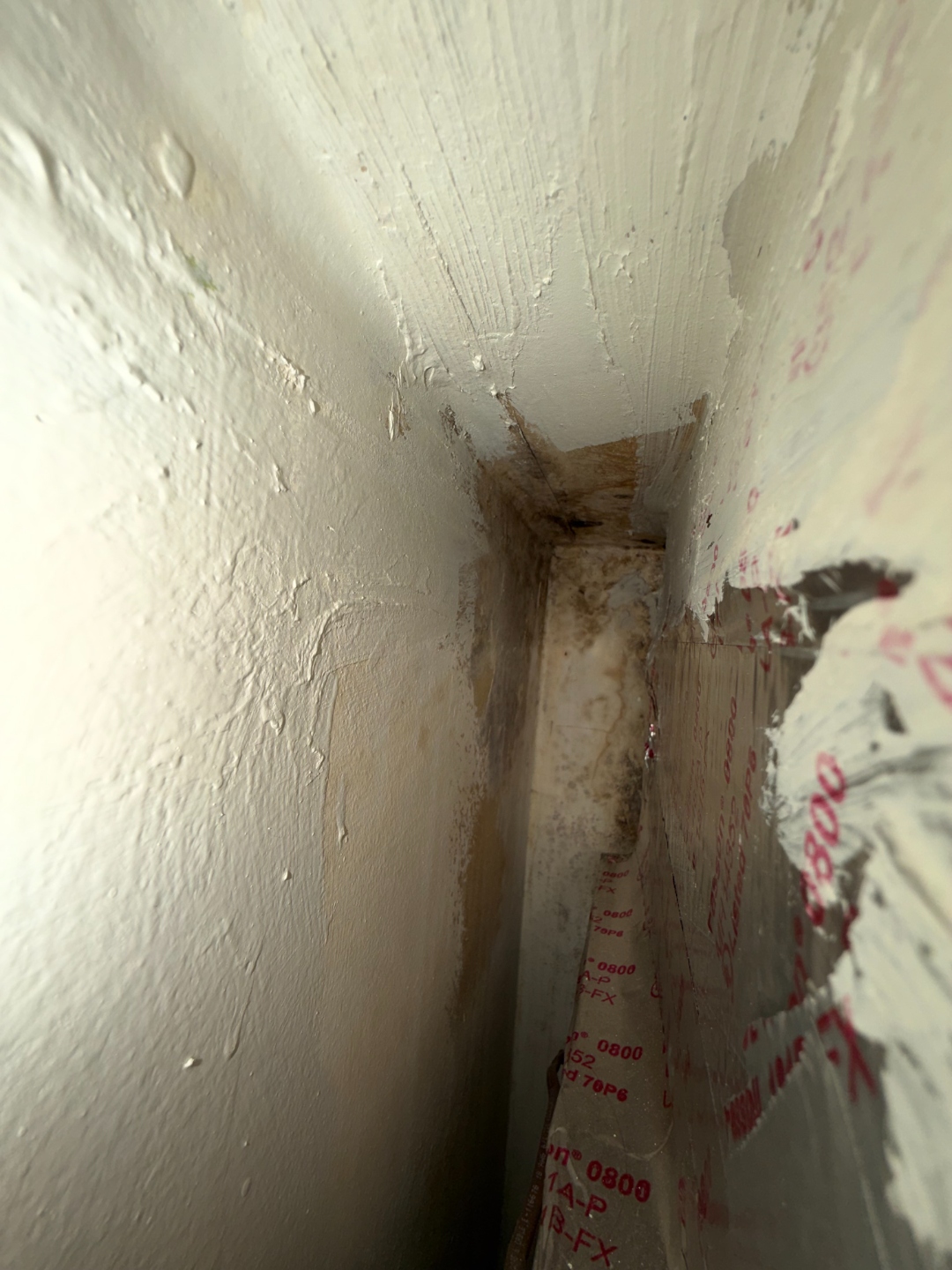
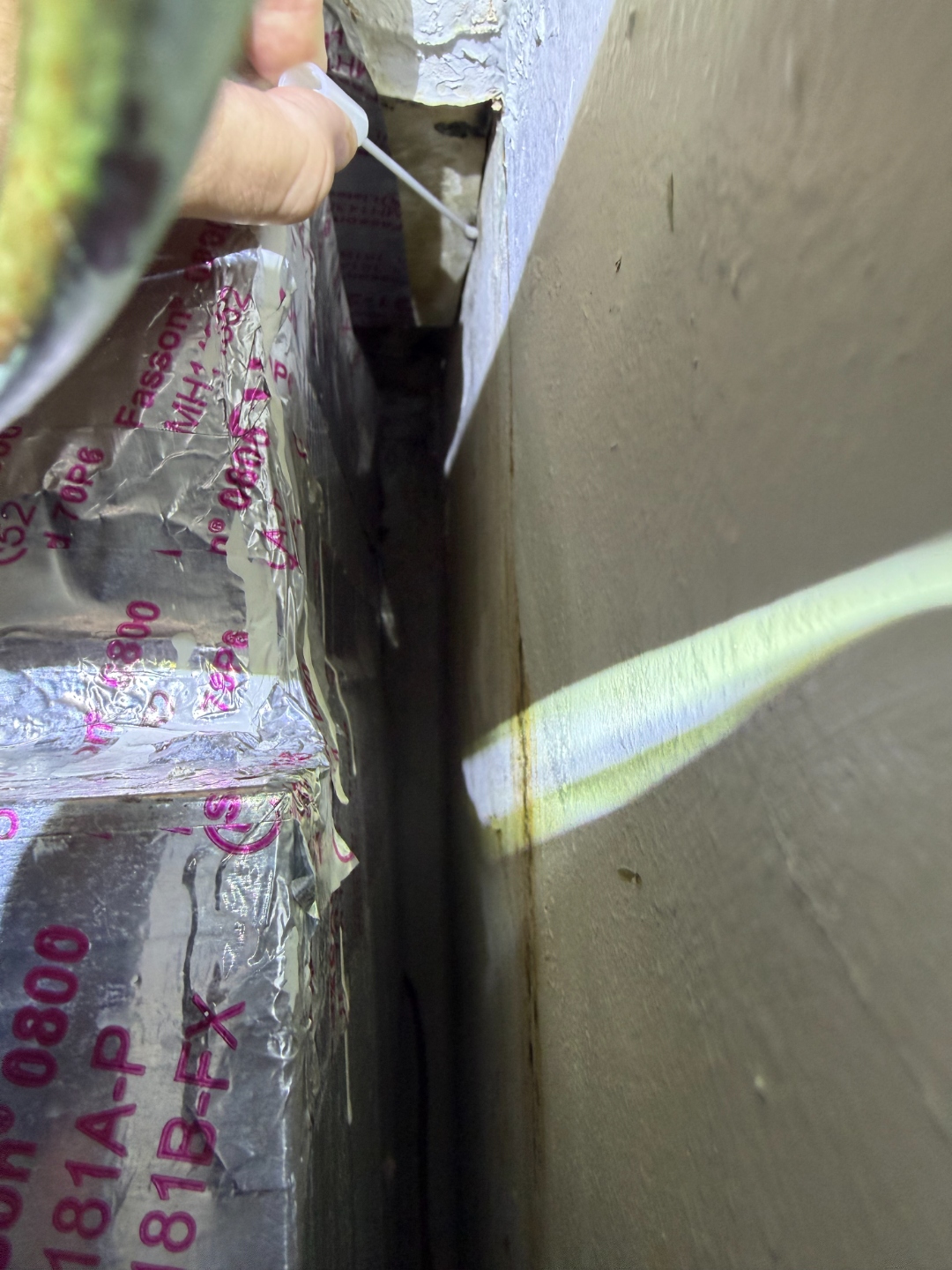
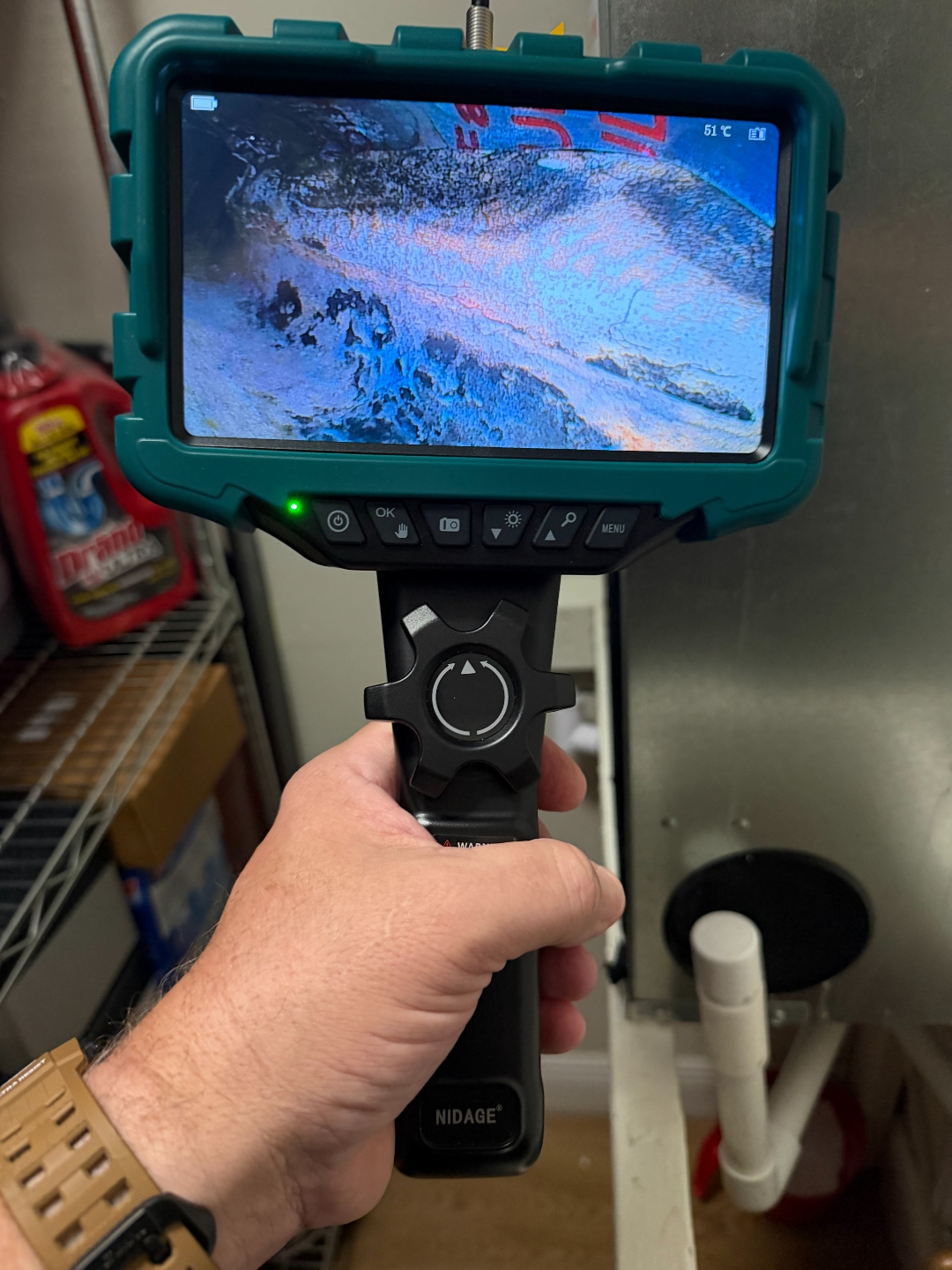
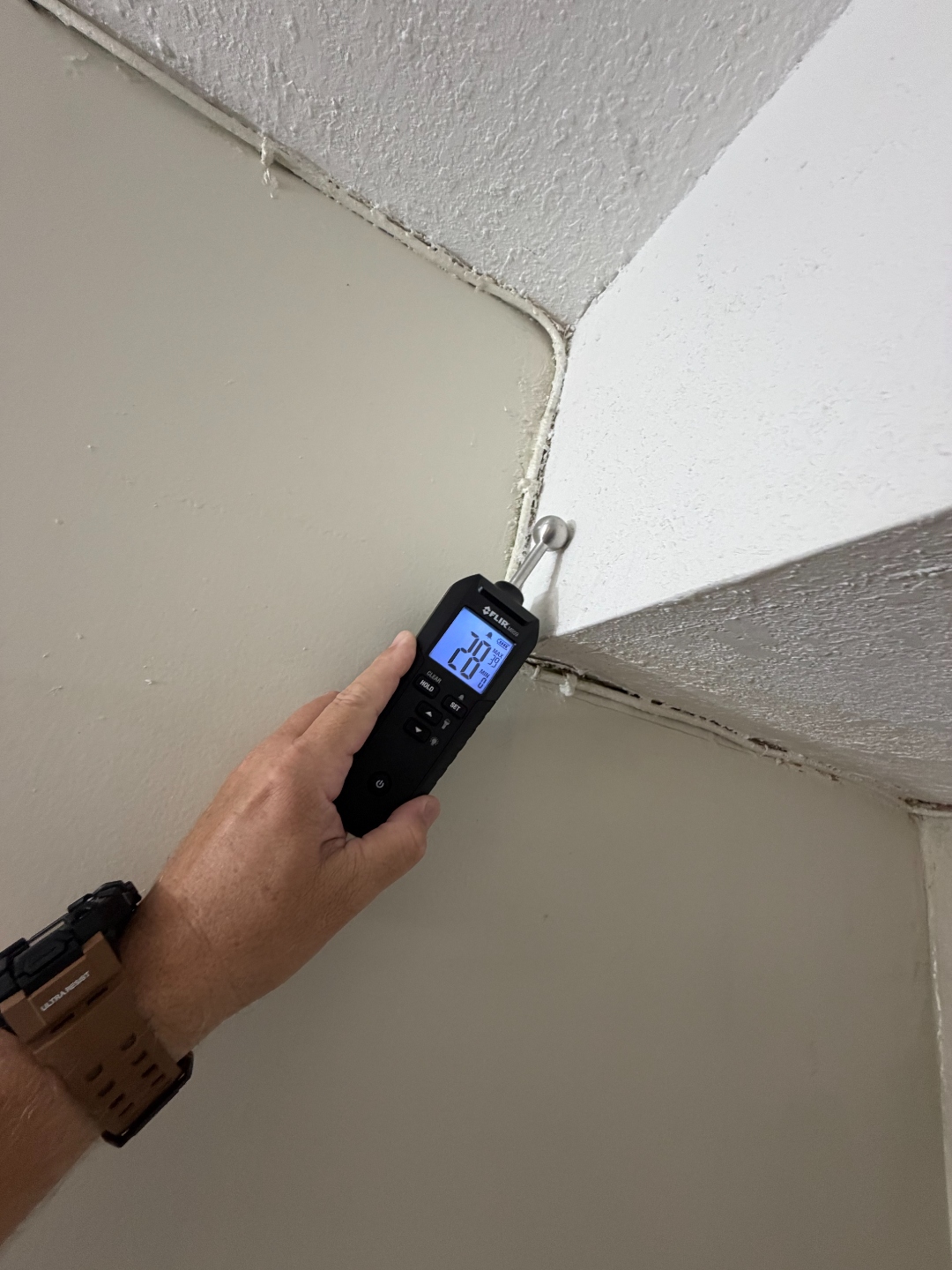
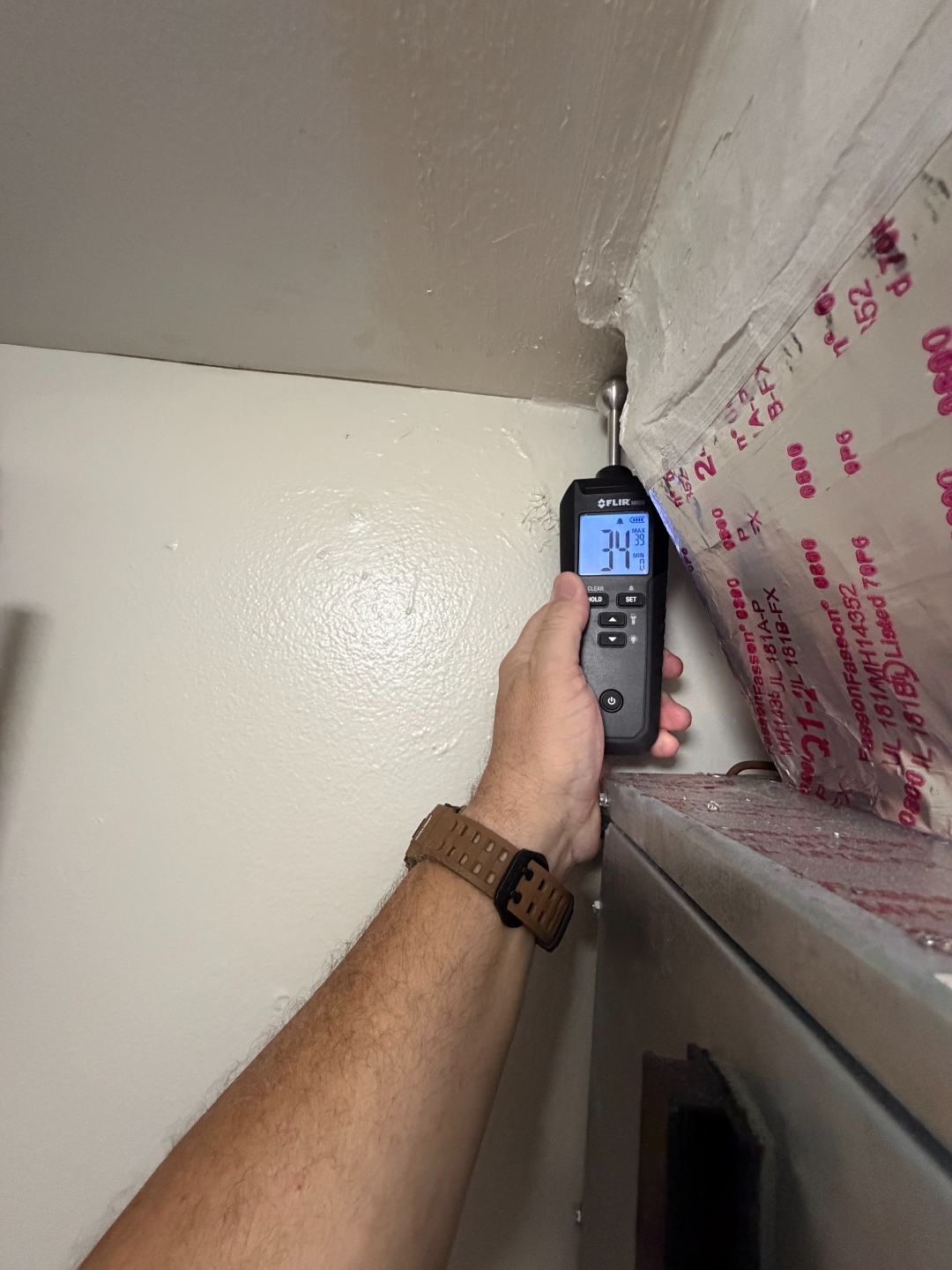
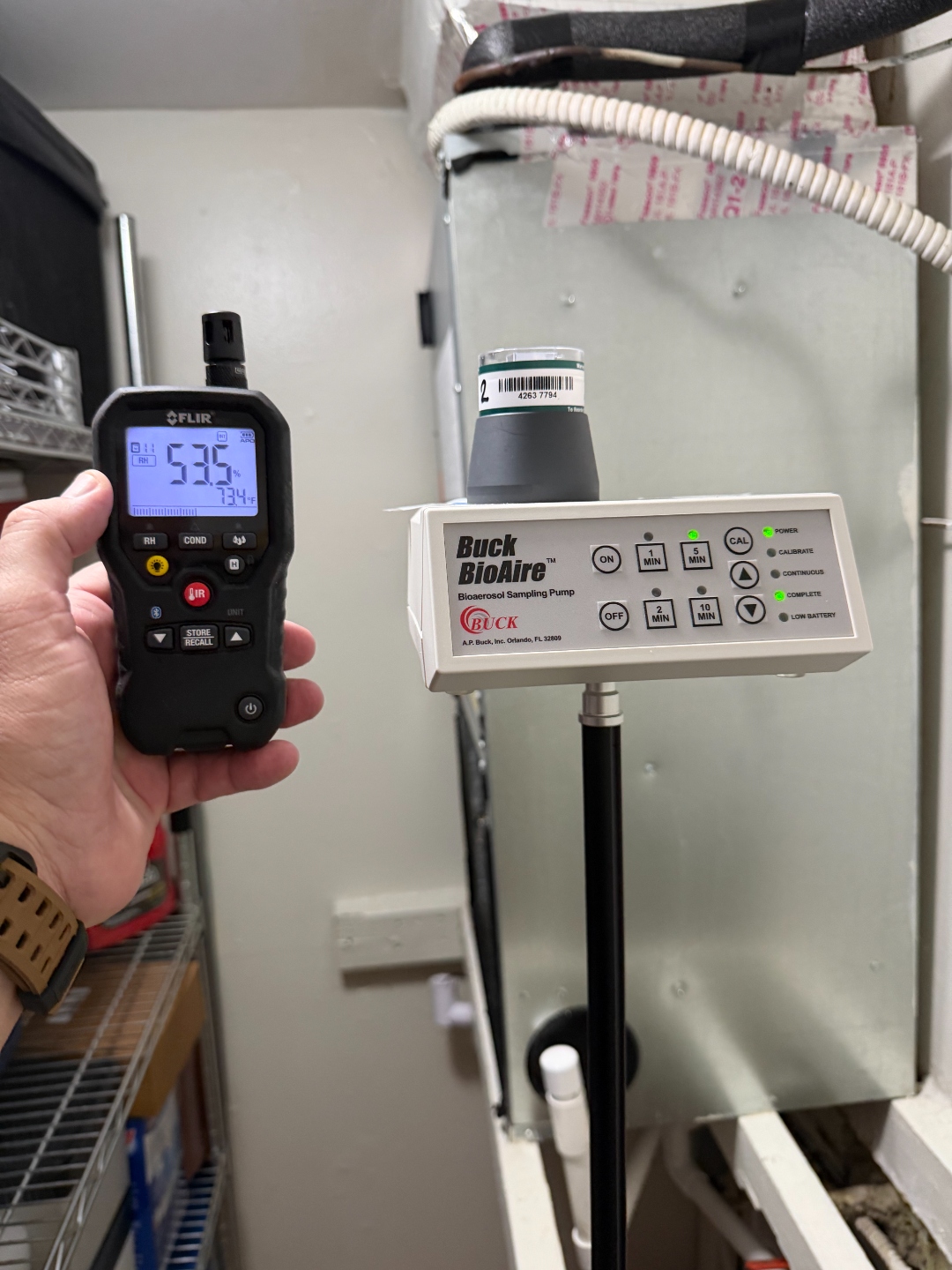
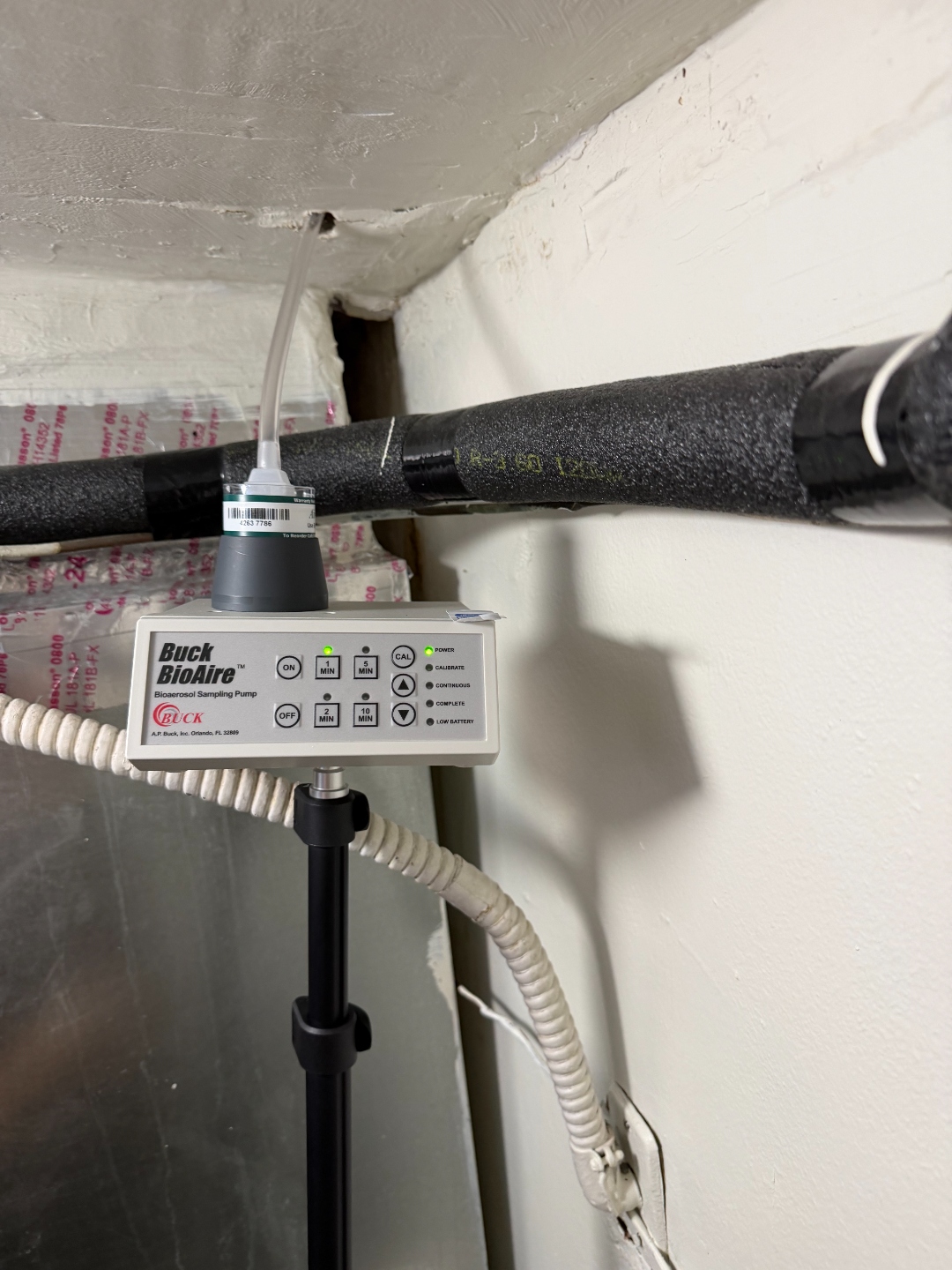
The investigation did not stop at the readily visible portions of the ceiling. A water stain tells an inspector where water became visible; it does not necessarily establish the full path the water traveled. Accessible ceiling-to-wall transitions and areas surrounding the air handler were evaluated, and a NIDAGE borescope inspection camera was used to visually examine difficult-to-access areas around and behind the HVAC equipment where normal visual access was limited. Moisture measurements were performed with a FLIR meter at selected ceiling and wall locations associated with the reported water intrusion, and the same instrument recorded indoor relative humidity and temperature, with one documented reading showing approximately 53.5% relative humidity and 73.4°F. Professional bioaerosol air sampling was also performed using a Buck BioAire sampling pump, with samples submitted to an accredited laboratory for analysis; environmental laboratory testing performed as part of the inspection is reviewed privately with the client and is not published here.
What the Investigation Found
The assessment identified water-related damage associated with water intrusion originating from the condominium unit above and migrating into the unit below. The AC closet and surrounding ceiling areas were among the primary affected locations. The inspection documented evidence of previous or current water intrusion affecting the ceiling and areas surrounding the AC closet, water-related staining and deterioration of building materials, and visible suspect microbial growth in areas around and behind the air handler. Some of these conditions extended into difficult-to-access areas behind and above the HVAC equipment that were not readily visible during a normal visual examination from the front of the closet. Taken together, the findings demonstrate that the effects of the reported upper-unit water intrusion were not limited to the first readily visible area of ceiling damage: conditions associated with the water-loss event were also identified within less accessible portions of the AC closet and surrounding building materials.
Based on the conditions documented during the assessment, several corrective actions were recommended: confirming that the source of water intrusion from the unit above has been completely corrected before restoration of affected materials is completed; addressing water-damaged and affected building materials within the AC closet and surrounding ceiling areas, including materials exhibiting deterioration or suspect microbial growth; extending the corrective scope to the areas around and behind the air handler affected by the water-loss event rather than limiting the work to the readily visible ceiling surface; evaluating any concealed materials exposed during corrective work for additional evidence of water damage, elevated moisture, deterioration, or suspect microbial growth; and not replacing removed materials until the original moisture source has been corrected and the affected area has been appropriately addressed and verified as sufficiently dry. Corrective work involving mold-affected materials should follow applicable professional practices and Florida requirements, and independent post-remediation verification may be performed when appropriate once that work is complete.
Why This Case Matters
This inspection is a useful case study because it demonstrates an important characteristic of water damage in multi-unit condominium buildings: the unit where water originates and the unit where significant damage is discovered may be different units. Stopping the water source is essential, but correcting the source does not automatically establish the condition of building materials in the unit below. Which materials were affected, how far the moisture migrated, whether affected materials are currently dry, whether water reached areas that are difficult to see, and whether mold testing is warranted are separate questions that still need to be answered. The visible ceiling damage in this Miami condominium provided a starting point; moisture measurements, closer inspection of the AC closet, investigation of difficult-to-access areas, environmental measurements, and mold sampling provided the additional information needed to answer them.
If water enters a condominium from the unit above, repairing the plumbing leak or other original source is only the first step. The unit below may require its own evaluation, particularly when water has affected ceilings, drywall, HVAC closets, wall cavities, or other areas where the full extent of moisture migration cannot be determined through a casual visual inspection. Water can follow paths that are not immediately obvious, and the place where a stain appears is not necessarily the only area that was affected. Home Enviro performs independent mold assessment, mold testing, moisture investigation, and indoor air quality testing throughout South Florida, and does not perform mold remediation. Keeping assessment and remediation separate helps maintain a clear distinction between identifying and documenting conditions and the contractor who may later perform corrective work.
This Investigation Used
- • FLIR multi-function meter (pin-type moisture readings and digital hygrometer)
- • NIDAGE borescope inspection camera
- • Buck BioAire bioaerosol sampling pump
Privacy Notice: This case study has been prepared from an actual Home Enviro inspection. All identifying information, including the tenant's name, property address, and personal details, has been removed or generalized to protect privacy. Only the city and general property type are disclosed. Laboratory results are not published; environmental testing was performed as part of the inspection and reviewed privately with the client. This case study is provided for educational purposes only.