Real Inspection Evidence
Every photo, thermal image, moisture reading, and lab report on this page comes from an actual South Florida investigation performed by a Home Enviro assessor. No stock photography, no staged conditions — just the original documentation our clients receive in their certified inspection reports.
Documentation You Can Verify
Mold inspection reports are only as credible as the evidence behind them. We built this library so homeowners, buyers, attorneys, property managers, and insurers can see exactly what our inspection evidence looks like before booking — thermal scans that reveal what's inside a wall, moisture readings that quantify a leak, lab-confirmed sampling results, and photographs of conditions most people never get to see inside their own building assemblies. Every category below links to real examples pulled from actual case files across the Home Enviro ecosystem, including our own hidden moisture and negative-pressure ductwork investigation and HVAC plenum tape contamination case, plus full walkthroughs on homeenviroinspection.com.
Original Photo & Imaging Evidence
A sample of unedited documentation captured during real inspections — thermal cameras, moisture meters, and standard photography used together on every job.
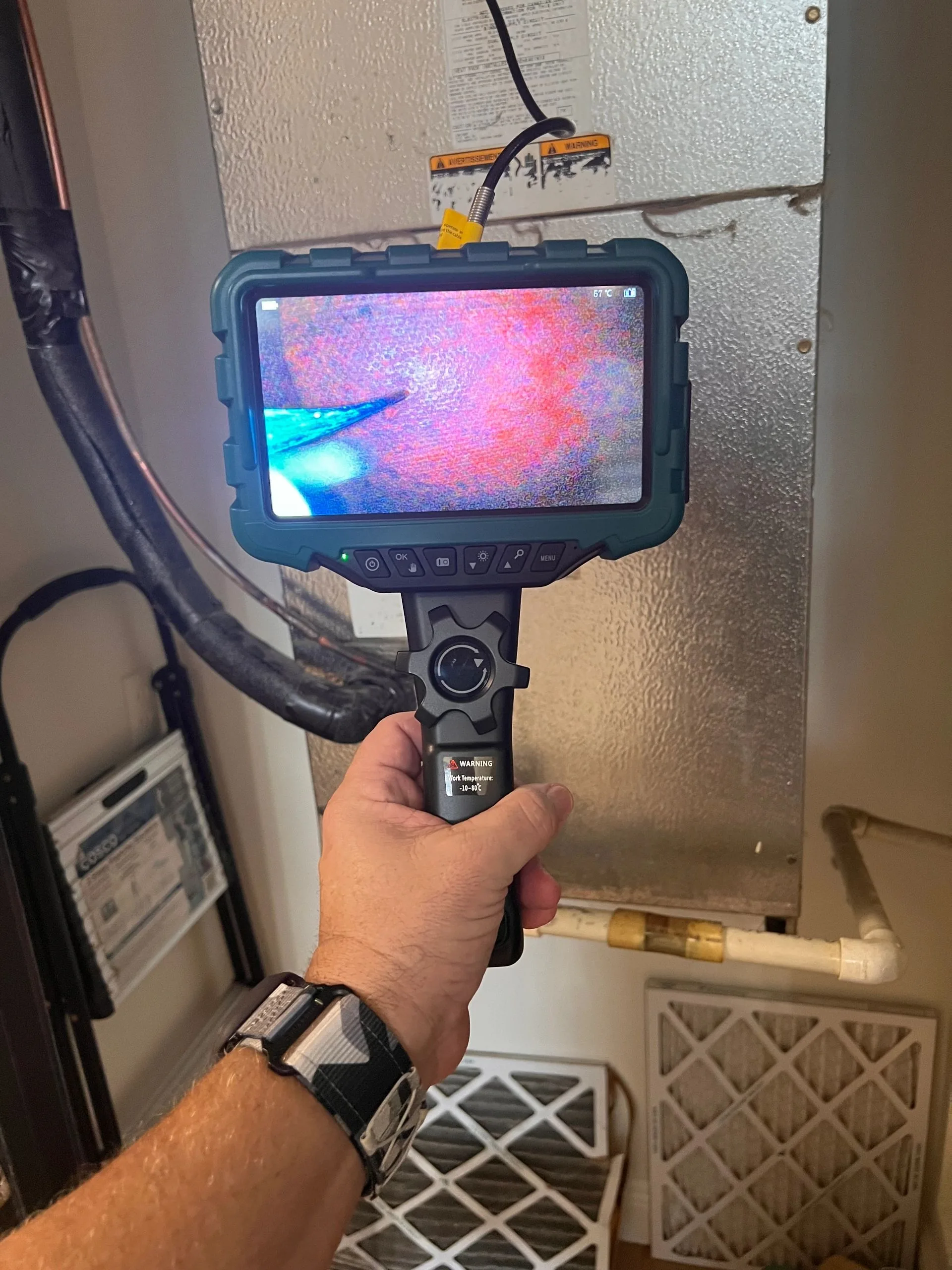
Thermal Camera in Use
An inspector scans a suspect wall assembly with an infrared thermal imaging camera during an active field inspection.
Thermal Anomaly on a Wall
Infrared output showing a cooler temperature signature consistent with elevated moisture trapped behind drywall.
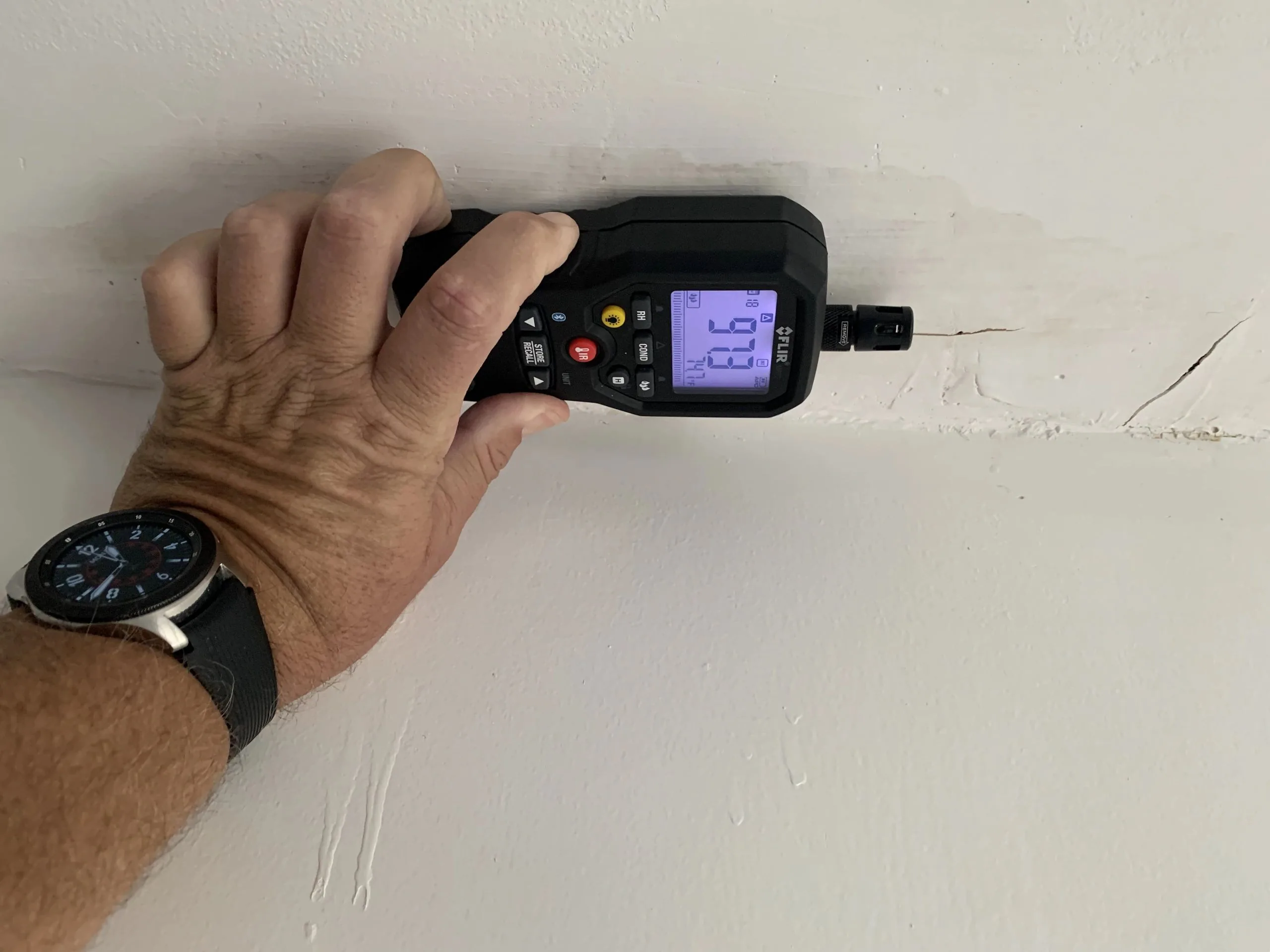
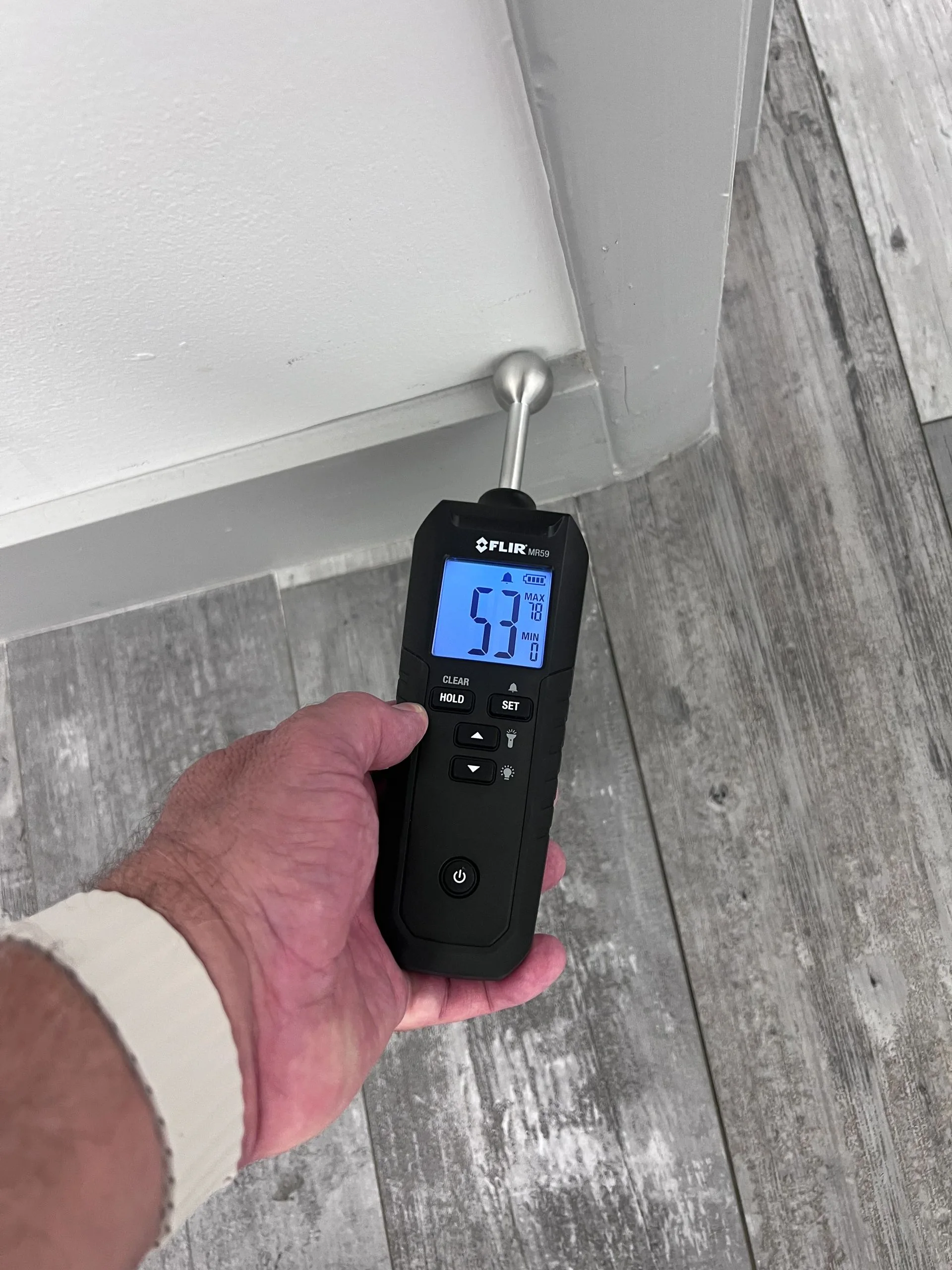
Moisture Meter Reading
A pin-type moisture meter records elevated moisture content inside a building material, quantifying what the thermal camera flagged visually.
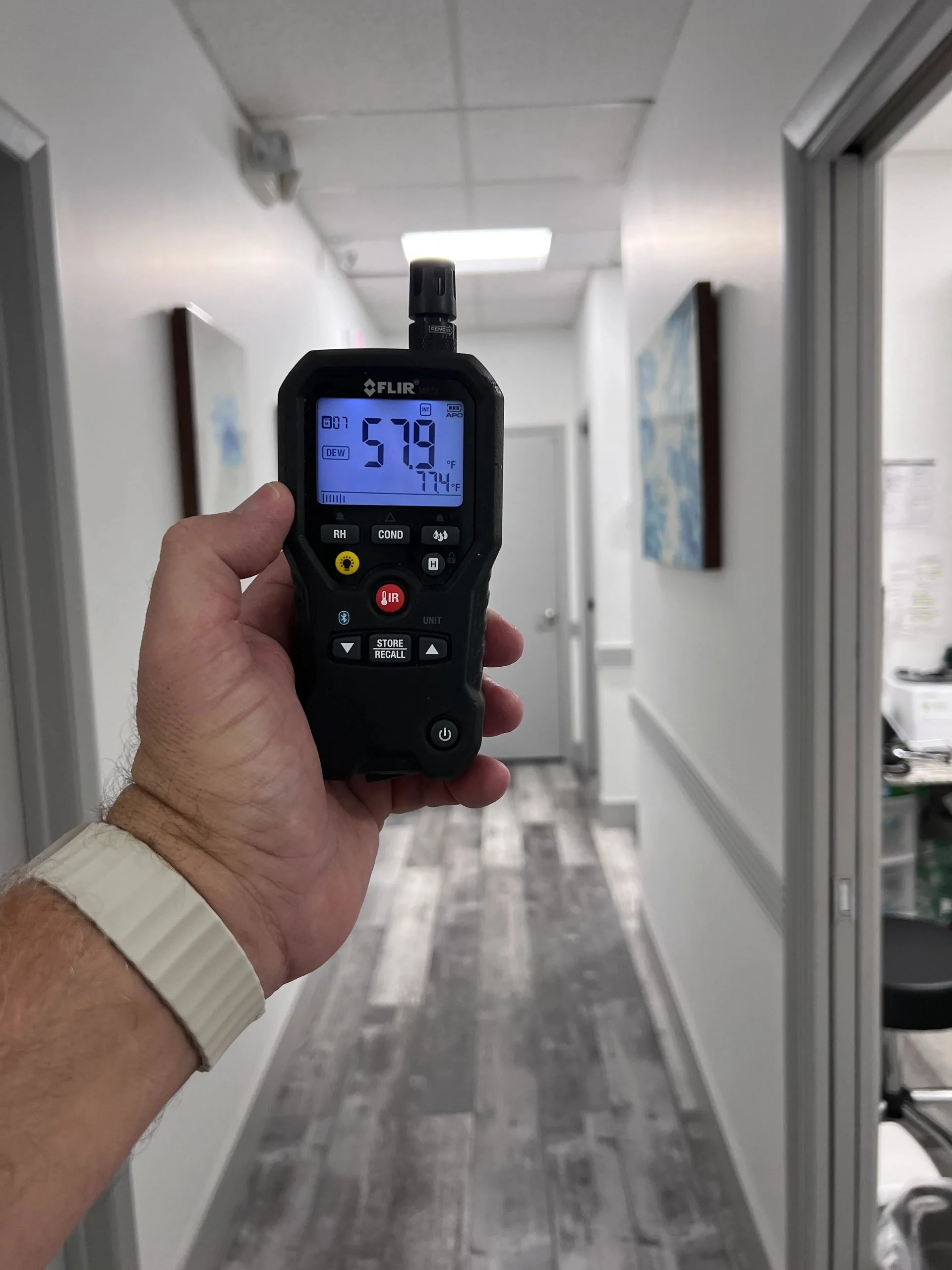
Moisture Mapping in Progress
A systematic moisture survey across a hallway, logging readings point by point to trace how far water has traveled inside the structure.
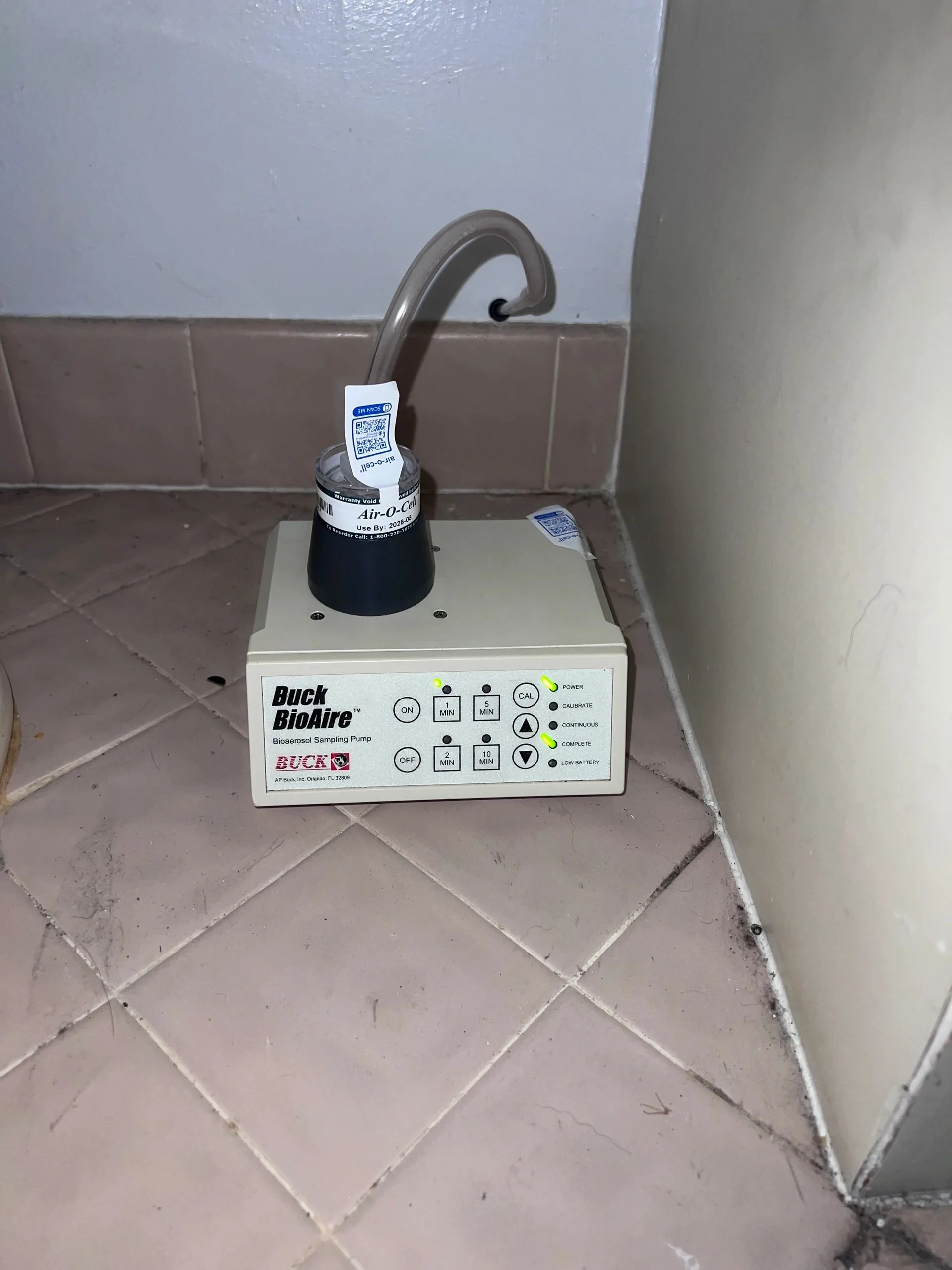
Air Sampling Pump
A calibrated air sampling pump draws a measured volume of air through a spore trap cassette for accredited laboratory analysis.
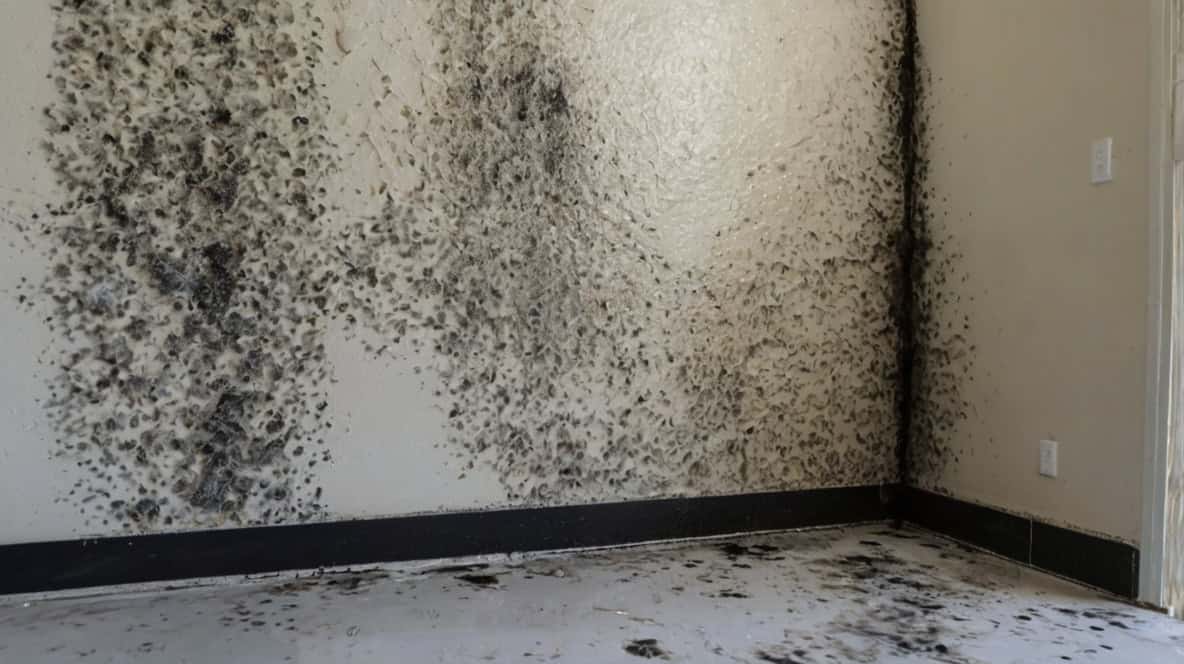
Visible Wall-Surface Growth
Active microbial growth on a finished wall surface, the stage at which mold has typically already colonized well beyond what's visible.
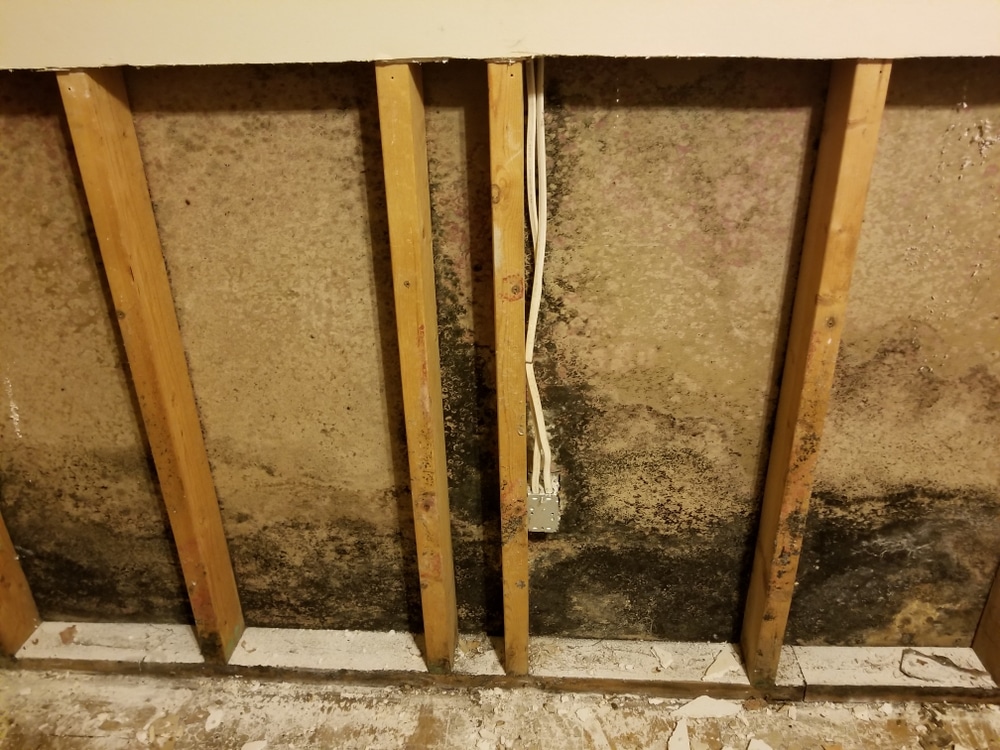
Concealed Growth Behind Baseboard
Dense colonization found on drywall once a baseboard was pulled back, illustrating why visual-only inspections miss so much.
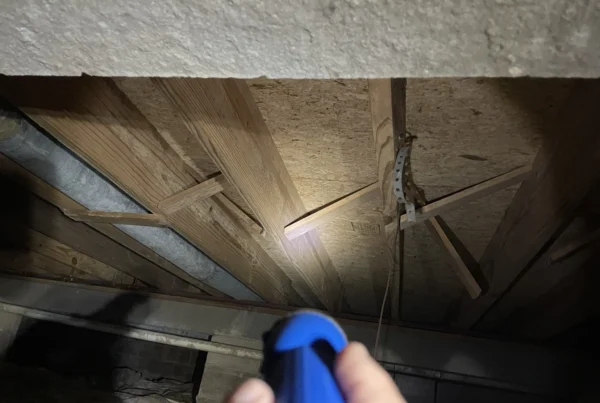
Crawlspace Investigation
A sub-area inspection checking framing, insulation, and ductwork for the elevated humidity that's common under South Florida homes.
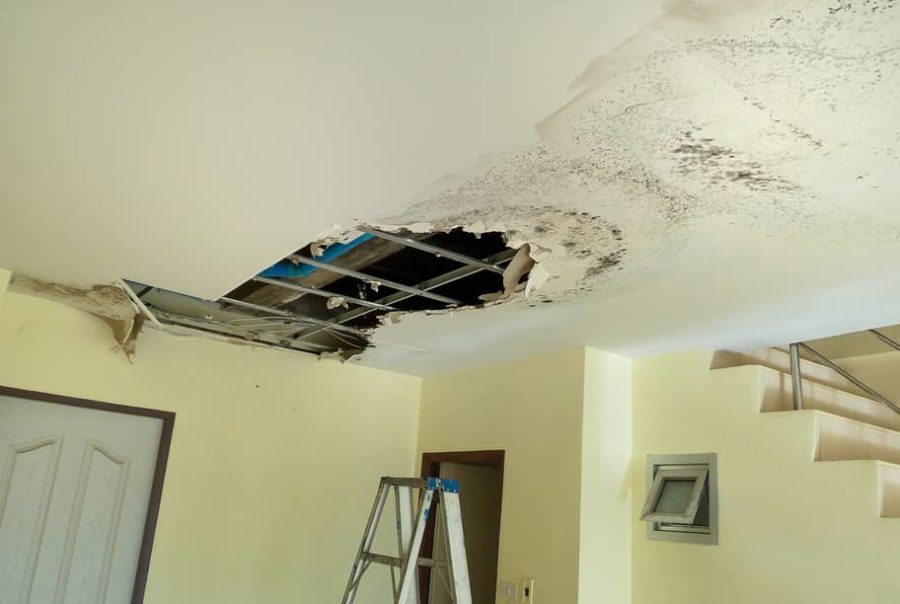
Active Ceiling Water Staining
A fresh water stain spreading across ceiling drywall, the kind of visible sign that should trigger a full moisture and mold investigation.
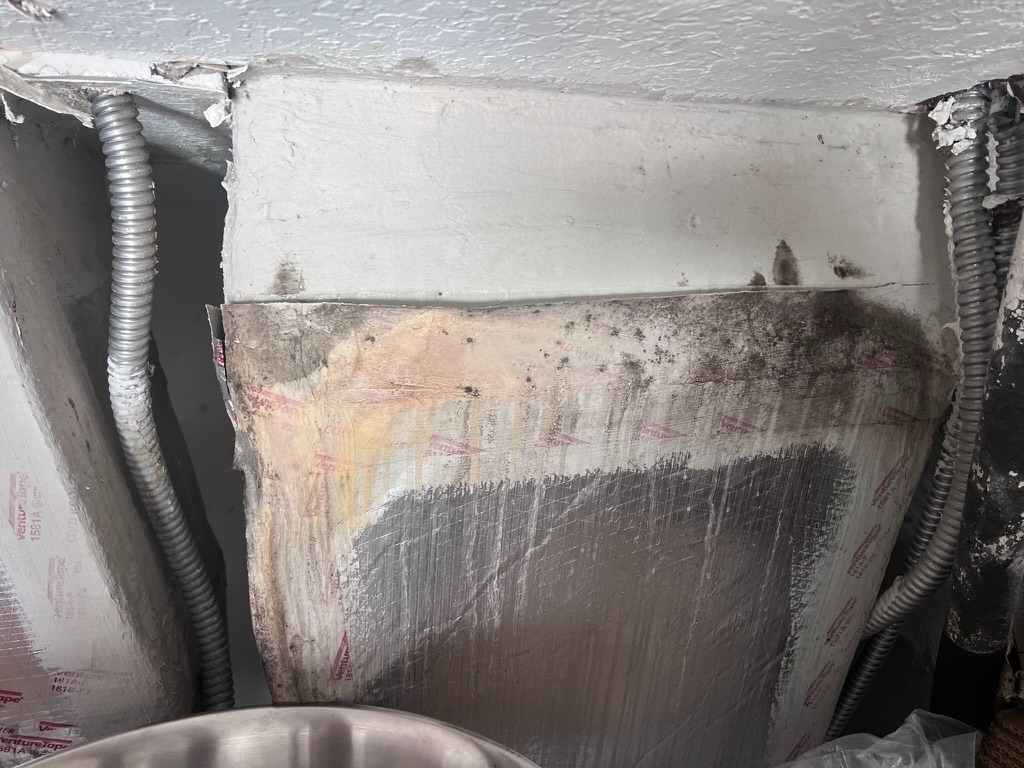
HVAC Plenum Contamination
Documented growth inside an air handler plenum from our Weston case file — see the full plenum tape article.
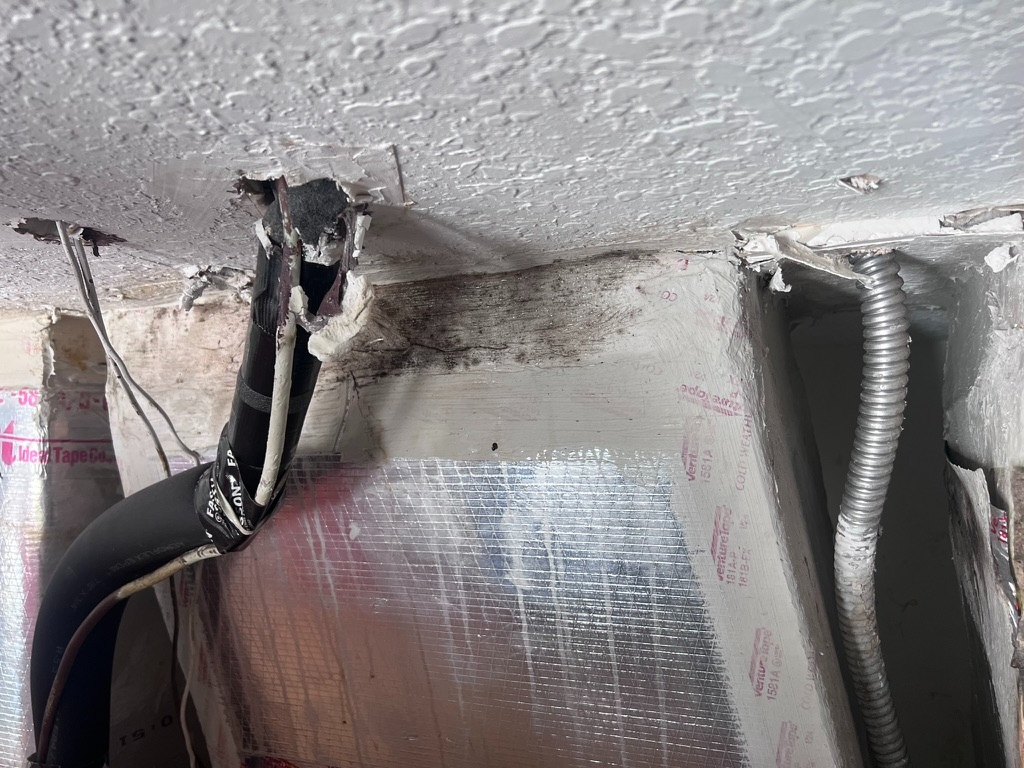
Plenum Tape Deterioration, Close-Up
The failed adhesive seam that let garage air, dust, and spores bypass filtration and enter the supply ductwork.
Evidence by Type
We don't hide behind stock photography. Every inspection we perform produces a written report with laboratory documentation, thermal images, and moisture data. Here's what each type of evidence actually looks like, and why it matters for the report you receive. Once your own report arrives, the Lab Report Help guide walks through how to read the lab-sampling results shown here.
Inspection Photos
Standard high-resolution photography documenting visible conditions — surface mold growth, water staining, deteriorated building materials, and the equipment used to test them. These photos anchor a report visually: an insurer, attorney, or property manager can see exactly what the inspector saw, in the exact location it was found, timestamped and geotagged to the inspection date. Photos alone rarely tell the whole story, which is why we pair them with thermal imaging and moisture readings on nearly every job — see the visible ceiling stain that led to a full wall-cavity investigation in our Aventura case study.
Moisture Mapping
Digital moisture meters measure moisture content inside building materials, pinpointing exactly where elevated moisture is feeding mold growth. Rather than a single reading, a proper moisture map surveys multiple points across a wall, ceiling, floor, and adjacent materials — carpet, padding, drywall, framing — to trace how far water has migrated from its source. In our Aventura investigation, moisture mapping across a dining room wall, the adjacent carpet and padding, and the ceiling above a master bathroom shower confirmed elevated moisture in every assembly tested, which is what justified the follow-up borescope inspection. See the full moisture mapping results in that case study.
Thermal Imaging
Infrared cameras detect temperature differences that reveal hidden moisture behind walls, ceilings, and floors without demolition. Wet materials hold and lose heat differently than dry ones, so a thermal scan shows a distinct temperature signature wherever water has intruded — even when the surface looks completely normal. We've used thermal imaging in 18 of our 25 published case studies to direct where a moisture meter or borescope should go next, rather than guessing. In the Aventura case, thermal anomalies in a dining room wall directed a video borescope inspection through a limited access opening above a shower, which then revealed suspected microbial growth on concealed drywall. Read the full thermal imaging findings.
Laboratory Reports
Air samples and surface swabs are collected on-site and sent to an accredited third-party laboratory to confirm mold species and spore concentration levels. This is the step that turns a visual suspicion into documented fact: a lab report identifies exactly which genera are present (Stachybotrys, Aspergillus, Penicillium, Chaetomium, and others common to South Florida's humidity), whether counts are elevated relative to outdoor background levels, and whether conditions warrant remediation. Every inspection we perform produces a certified written report combining lab results with the thermal images and moisture data collected on-site — the kind of documentation accepted by insurers, attorneys, and lenders. For species-specific detail on what a lab report might identify, see our Mold Species Library.
HVAC Contamination Evidence
Air handlers, ductwork, and plenums are inspected for microbial growth, deteriorated seals, and pathways that let contaminated air bypass filtration. HVAC systems are one of the most common places we find contamination that homeowners never see, because it's inside sealed metal and fiberboard components. Our own investigation into a Weston home documented significant deterioration of the adhesive plenum tape surrounding an air handler located in an attached garage — the failed seal created gaps that let contaminated garage air, dust, fiberglass particles, and fungal spores get drawn into the system by the unit's own negative pressure, then distributed through the ductwork to supply vents throughout the home. Read the complete findings in our HVAC Plenum Tape Mold Contamination article and the source investigation on homeenviroinspection.com.
Water Intrusion Evidence
Documentation of the water sources behind mold growth — roof leaks, plumbing failures, hurricane-driven wind-water intrusion, negative-pressure ductwork pulling in humid outside air, and slow leaks inside wall cavities that go unnoticed for months. South Florida's storm season and year-round humidity make water intrusion the root cause behind the overwhelming majority of the mold cases we investigate, so tracing it back to its source is often the most important finding in a report. Our Hidden Moisture & Negative Pressure Ductwork article documents how a poorly sealed duct system can depressurize a home enough to pull humid, unconditioned air through wall assemblies, feeding mold growth with no visible leak at all. Combined with moisture mapping and thermal imaging, this evidence type is what separates "there's mold" from "here's exactly where the water is coming from and why."
Related Resources
This evidence library is one part of a larger Resource Center. Continue exploring related content below.
Case Studies
Full investigation write-ups organized by category, from residential wall cavities to HVAC contamination and hurricane-driven water intrusion.
View case studiesLearning Center
Plain-language guides explaining how mold grows, how it's tested, and what South Florida homeowners should know before booking an inspection.
Browse guidesMold Species Library
Regional summaries of the mold species most commonly found in South Florida homes, with links to full lab-grade species profiles.
Explore speciesResource Center Home
Return to the Florida Mold Experts Resource Center to explore the full library of guides, videos, and inspection resources.
Back to Resource CenterWant This Kind of Documentation for Your Own Property?
Every inspection we perform generates the same evidence you've seen on this page — thermal images, moisture maps, lab-confirmed sampling, and a certified written report. Schedule an inspection and get documentation you can actually use.