
Active Roof Leak and Moisture Intrusion Following Roof Replacement in Lauderhill, Florida
Independent Mold Inspection & Testing Company · Real Investigation
The occupants of an apartment in Lauderhill, Florida contacted Home Enviro because water was still entering their home even though the building's roof had recently been redone. They were concerned about moisture damage and the possibility of mold, and requested an independent inspection. Home Enviro's role was strictly to investigate and document; it does not perform repair or remediation work.
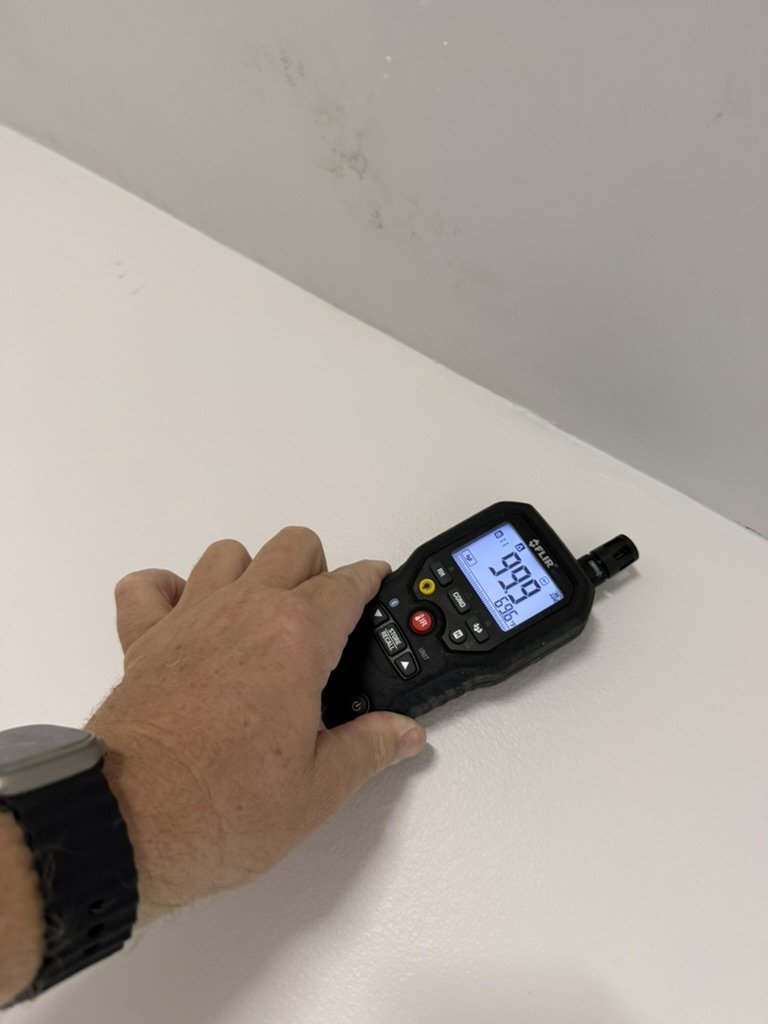
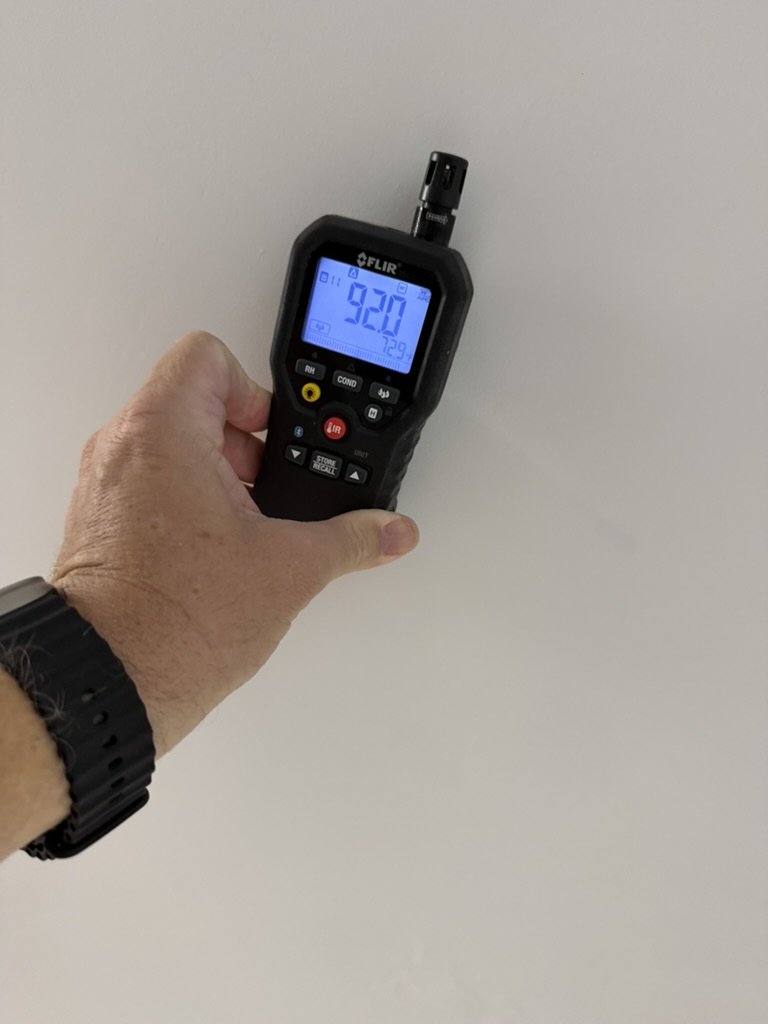
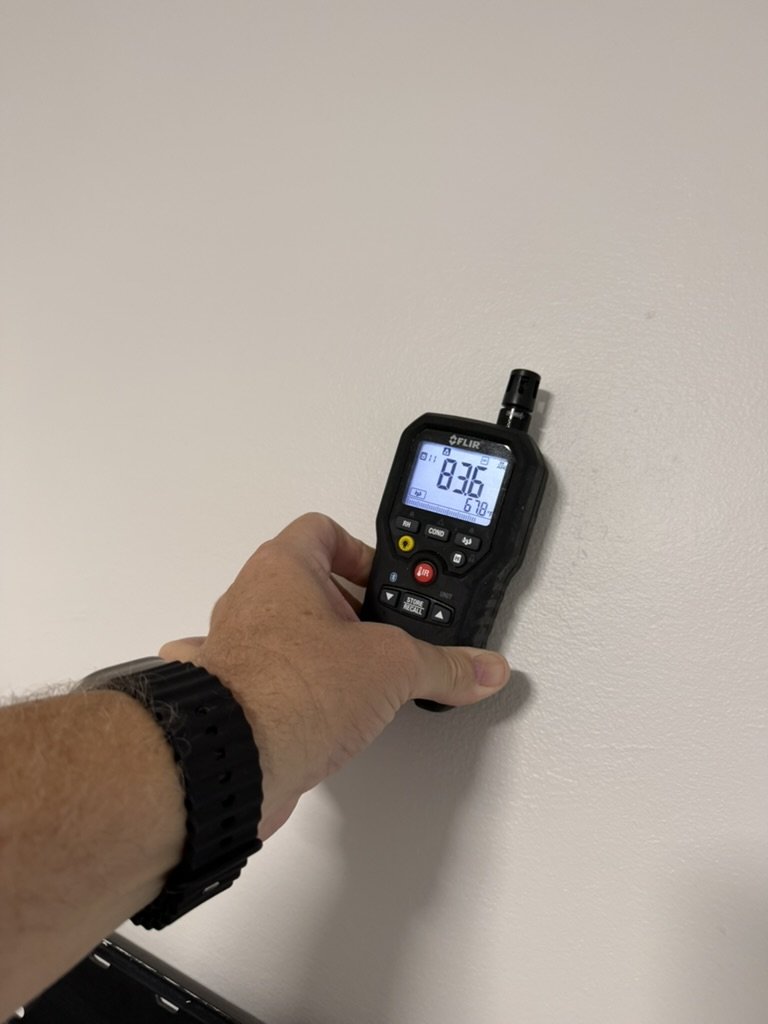
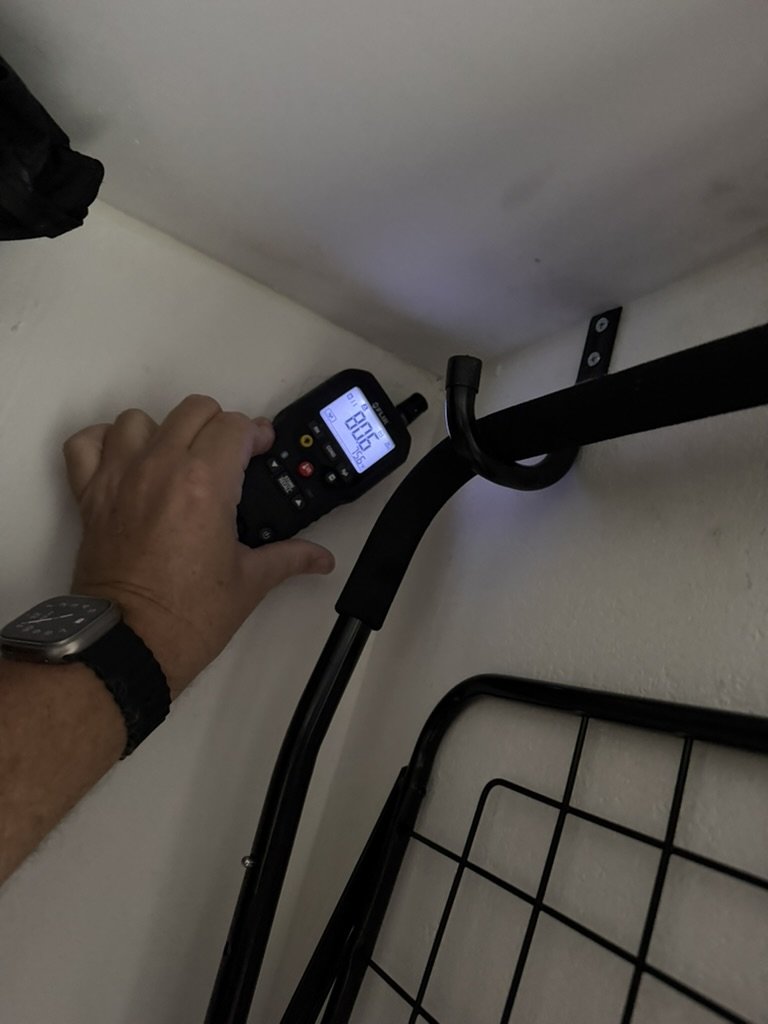
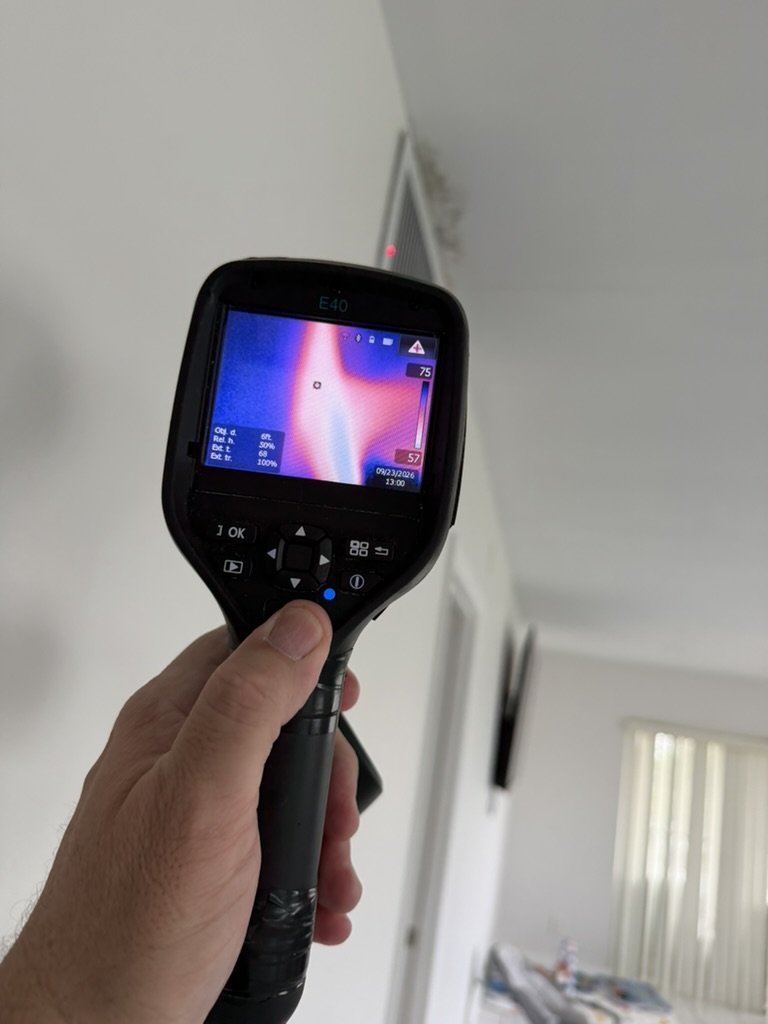
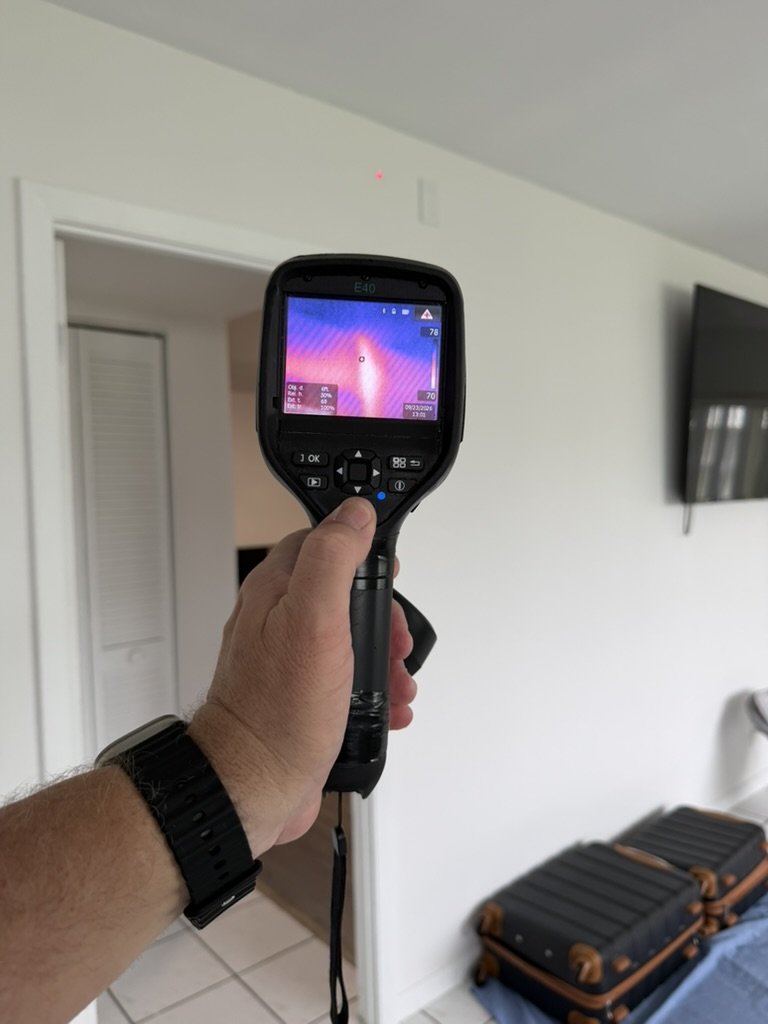
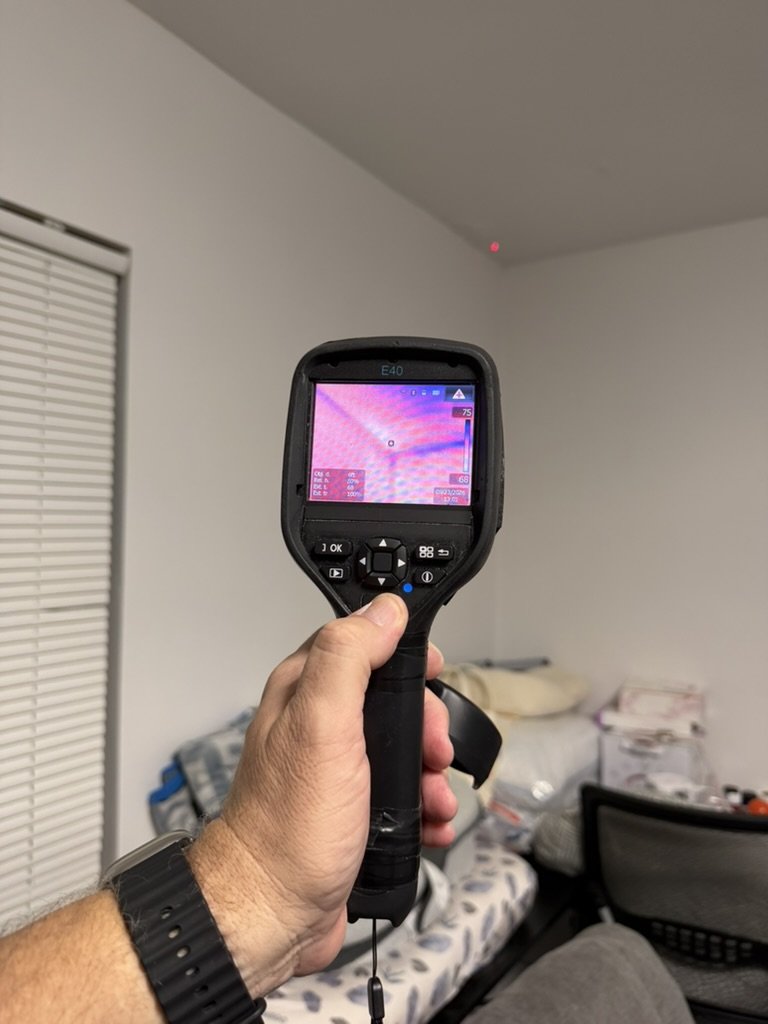
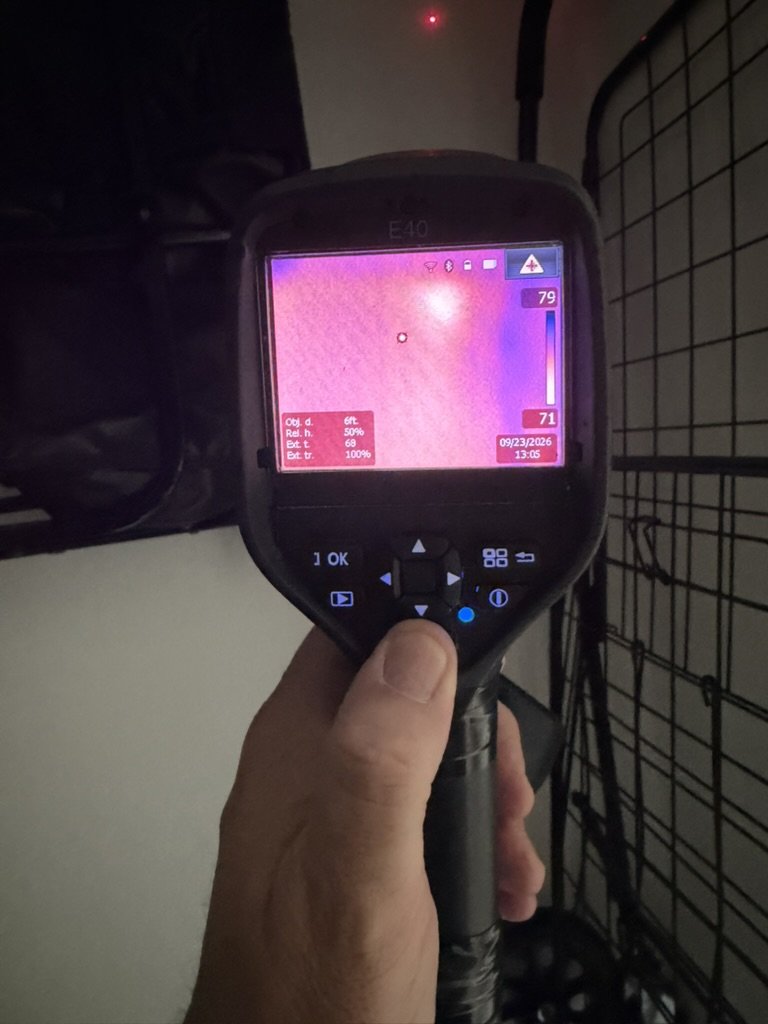
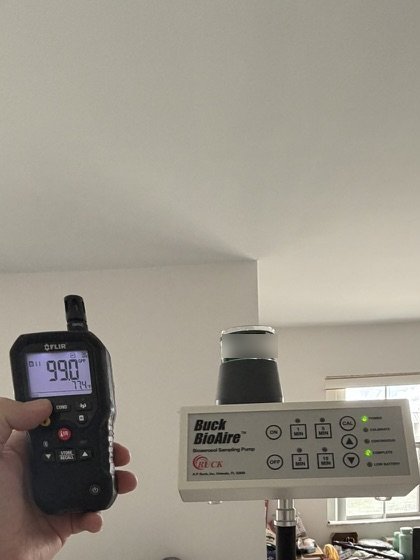
The inspection focused on the ceilings, beginning in the TV and dining room. A FLIR handheld moisture meter was used on ceiling and wall surfaces in several rooms, including a closet. A FLIR E40 thermal imaging camera was then used to scan the ceiling beside the air conditioning grille in the TV and dining room, as well as the living area, a bedroom and a closet, looking for temperature patterns that can point to moisture behind a surface.
As part of the mold assessment, indoor air and surface sampling was also performed.
What the Investigation Found
The investigation confirmed that, although the roof had recently been redone, an active roof leak remained and was allowing water to enter the apartment. Water-related staining was observed on the TV and dining room ceiling near the air conditioning grille.
Home Enviro recommended that a qualified roofing contractor conduct a thorough investigation of the roofing system to identify the source of the continuing water intrusion. Once the source is identified, the necessary roof repairs should be completed to permanently correct the leak. The affected interior building materials should then be evaluated and properly addressed based on their moisture conditions.
Why This Case Matters
A new roof does not always mean the water problem is solved. When staining appears or keeps returning after roofing work, the source of the water still has to be confirmed, because building materials that stay wet can support mold growth. The U.S. EPA advises fixing the water problem first and drying water-damaged materials promptly. This case follows that order: identify and correct the leak, then evaluate the affected ceiling materials based on their actual moisture conditions, rather than repairing or repainting a stained ceiling while water is still getting in.
This Investigation Used
- • FLIR handheld moisture meter
- • FLIR E40 thermal imaging camera
- • Buck BioAire air sampling pump for indoor air sampling
- • Surface sampling for laboratory analysis
Privacy Notice: This case study has been prepared from an actual Home Enviro inspection. All identifying information — including the tenant's name, property address, and personal details — has been removed or generalized to protect privacy. Only the city and general property type are disclosed. Laboratory results are not published; environmental testing was performed as part of the inspection and reviewed privately with the client. This case study is provided for educational purposes only.